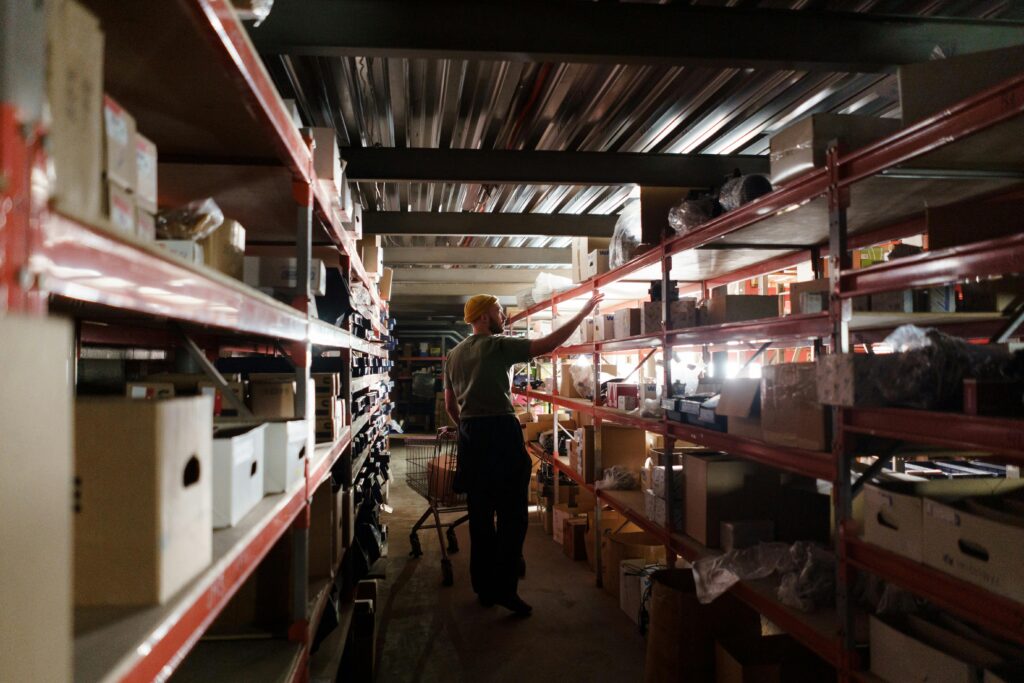
Manufacturing Cash Flow Optimization
Manufacturing businesses can generate strong revenue and healthy gross margins and still run out of cash. Long production cycles, raw material purchases made months before revenue arrives, slow-paying customers, and large inventory balances all create structural pressure on liquidity that does not appear in a standard income statement.
This is one of the most misunderstood financial realities in manufacturing: profitability and cash flow are not the same thing. A manufacturer can show a profit on paper while simultaneously facing payroll stress, strained vendor relationships, and a maxed-out credit line.
Effective cash flow management for manufacturers requires a fundamentally different set of tools than standard accounting.
At Westport Financial, we help manufacturing companies build the financial systems, forecasting discipline, and working capital strategies needed to maintain strong liquidity through production cycles, growth phases, and demand fluctuations.
Why Cash Flow Is Structurally Difficult for Manufacturing Companies
Manufacturing businesses operate with a cash conversion cycle that is inherently longer and more complex than most other industries. Cash leaves the business — to buy raw materials, pay labor, and fund overhead — well before it returns through customer collections.
The most common structural cash flow pressures we see in manufacturing businesses:
- Raw material purchases are made weeks or months before production begins
- Production cycles tie up cash in work-in-progress inventory that has no immediate revenue value
- Finished goods may sit in warehouse inventory before a sale is even made
- Customer payment terms of 30, 60, or 90 days extend the cash gap further
- Equipment investments create large, lumpy cash outflows that don’t align with revenue timing
- Seasonal demand creates periods of high cash outflow followed by delayed cash inflow
The result is a working capital gap — a period where cash has left the business but hasn’t come back yet. For a growing manufacturer, this gap gets wider as revenue increases, which is why fast-growing manufacturing companies often face the most acute cash pressure.
Understanding the Cash Conversion Cycle
The cash conversion cycle (CCC) is the single most important cash flow metric for a manufacturing company. It measures how many days cash is tied up in operations from the moment it is spent on inputs to the moment it is collected from customers.
Cash Conversion Cycle (CCC) = Days Inventory Outstanding + Days Sales Outstanding – Days Payable Outstanding
A lower CCC means cash moves through the business faster. A higher CCC means more working capital is required to sustain the same level of production.
For example, a manufacturer with a 45-day inventory hold, 60-day customer collections, and 30-day vendor payments has a CCC of 75 days. That means the business needs to fund 75 days of operating costs from its own working capital at any given time.
Reducing the CCC by even 10–15 days can free significant cash without changing revenue or profitability. This is where working capital management creates direct financial value.
Learn how Fractional Controllers for Manufacturing Companies can help improve cash cycle times.
Five Strategies to Improve Manufacturing Cash Flow
1. Build a 13-Week Cash Flow Forecast
Most manufacturers manage cash flow reactively — they know there is a problem when it arrives. A 13-week rolling cash flow forecast shifts that to proactive management.
A 13-week forecast maps every expected cash inflow and outflow across a 90-day window, updated weekly. It tracks:
- Expected customer payment receipts by week
- Payroll and benefits obligations
- Vendor payment commitments
- Raw material and inventory purchases
- Debt service and lease obligations
- Capital expenditure timing
With this level of visibility, management can identify a potential cash shortage three to six weeks before it occurs — and take corrective action through collections acceleration, purchasing delays, or credit line draws rather than reacting in crisis.
The 13-week cash flow forecast is the single most impactful tool we implement with new manufacturing clients. Most see an immediate improvement in financial confidence simply from having visibility they did not have before.
2. Optimize Inventory to Free Working Capital
Inventory is the largest use of cash in most manufacturing businesses — and the area with the most immediate opportunity for improvement. Working capital is your current asset less your current liabilities – work to identify gaps in potential cash.
The goal is not to minimize inventory, which can disrupt production. The goal is to hold the right inventory at the right levels. Common opportunities:
- Improve demand forecasting to reduce safety stock held against uncertainty
- Identify and liquidate slow-moving or obsolete inventory that is tying up capital without prospect of sale
- Align purchasing schedules more tightly with production timelines to reduce raw material sitting time
- Increase inventory turnover by accelerating production cycles where possible
- Review supplier lead times — long lead times force higher safety stock; shorter lead times allow leaner inventory
A manufacturer carrying $2M in inventory at 6x annual turnover has $333K tied up per turnover cycle. Improving to 8x turnover frees approximately $250,000 in working capital with no change to revenue.
3. Tighten Accounts Receivable Collections
Every day a customer invoice goes unpaid is a day cash is effectively loaned to that customer at no interest. Reducing days sales outstanding (DSO) is often the fastest way to improve available liquidity.
Best practices for manufacturing AR management:
- Issue invoices immediately upon shipment — not at the end of the week or month
- Set clear payment terms in every customer contract, with late payment penalties specified
- Review accounts receivable aging weekly, not monthly
- Follow up on overdue invoices within 24–48 hours of the due date, not weeks later
- Offer early payment discounts (e.g., 2/10 net 30) to incentivize faster collection from customers where the discount cost is justified
- Flag and escalate slow-paying customers before balances become collection problems
A manufacturer with $3M in annual revenue and a 60-day DSO has approximately $490,000 tied up in receivables. Reducing DSO to 45 days frees roughly $123,000 in working capital immediately.
4. Strategically Manage Vendor Payment Terms
Accounts payable is working capital in the other direction — the longer a manufacturer can responsibly hold cash before paying suppliers, the better the liquidity position. Most manufacturers pay too quickly without leveraging the negotiating opportunities available.
- Negotiate extended payment terms with key suppliers — 45 or 60 days is often achievable with established vendor relationships
- Align payable due dates with customer collection timing where possible
- Consolidate purchasing volume to fewer suppliers to increase negotiating leverage on terms
- Avoid automatic early payment unless a discount is being earned that justifies the accelerated cash outflow
Extending average payables from 30 to 45 days on $1.5M in annual purchases frees approximately $62,000 in working capital on a sustained basis.
5. Plan Capital Expenditures to Protect Liquidity
Equipment investments, facility upgrades, and technology implementations are necessary for manufacturing growth — but they are large, lumpy cash outflows that can seriously stress liquidity if not planned properly.
Capital expenditure planning should include:
- Multi-year capital expenditure forecasts integrated into the cash flow model
- Lease vs. purchase analysis — leasing preserves cash and converts a large outflow into predictable monthly payments
- Financing options analysis — equipment financing, SBA loans, and line of credit draws each have different cash flow implications
- Return on investment modeling — confirm the investment generates sufficient cash return to justify the capital commitment
- Timing optimization — schedule major expenditures during cash-rich periods in the seasonal cycle, not during cash-thin periods
Key Cash Flow Metrics Every Manufacturer Should Track
Strong cash flow management requires regular monitoring of the metrics that drive liquidity. These should be reviewed at minimum monthly — and ideally tracked on a live dashboard.
| Metric | What It Measures | Why It Matters for Cash Flow |
| Cash Conversion Cycle (CCC) | Total days cash is tied up in operations | The single most important cash flow metric — lower is better |
| Days Sales Outstanding (DSO) | Average days to collect from customers | High DSO = slow collections = less available cash |
| Days Inventory Outstanding (DIO) | Average days inventory is held | High DIO = excess capital tied up in stock |
| Days Payable Outstanding (DPO) | Average days to pay suppliers | Higher DPO = longer to pay = more cash retained |
| Inventory Turnover | How many times inventory cycles per year | Low turnover signals slow-moving or excess inventory |
| Operating Cash Flow Ratio | Cash generated relative to current liabilities | Measures ability to cover obligations from operations |
The Cash Conversion Cycle integrates all three operational metrics — inventory, receivables, and payables — into a single number that tells you exactly how efficiently cash moves through the business. It is the most powerful starting point for any working capital improvement effort.
The Role of Financial Leadership in Manufacturing Cash Flow
Most manufacturing businesses rely on accounting processes that are backward-looking by design — they record what happened, not what is about to happen. Managing cash flow effectively requires a fundamentally different capability: forward-looking financial analysis built around the operational rhythm of the business.
This is the distinction between accounting and financial leadership. A controller ensures the books are right. A CFO ensures the business has the cash it needs to operate and grow. Cash Flow Management for Manufacturers is where Westport Financial steps in – we bridge the gap between your CFO, Controller, Accounting, and Finance.
For growing manufacturers, both functions are critical — and increasingly, manufacturers are accessing them through outsourced and fractional engagements rather than full-time hires.
Strong financial leadership helps manufacturers:
- Build and maintain accurate 13-week and annual cash flow forecasts
- Monitor working capital metrics and identify deterioration before it becomes a crisis
- Align production planning and purchasing with financial resource availability
- Make capital investment decisions with full cash flow impact modeling
- Identify and correct the specific drivers of cash flow stress in each production cycle
Frequently Asked Questions: Manufacturing Cash Flow Management
Why do profitable manufacturing companies still struggle with cash flow?
Profitability is an accounting measurement — it reflects revenue minus expenses over a period, regardless of when cash actually changes hands. Cash flow reflects actual cash movements. A manufacturer can record a profitable sale on Day 1 but not collect the cash until Day 60, while having paid for materials and labor weeks before production began. This timing gap between cash outflows and inflows is the core structural challenge of manufacturing cash flow, and it has nothing to do with whether the business is profitable.
What is a 13-week cash flow forecast and why do manufacturers use it?
A 13-week cash flow forecast is a rolling 90-day projection of all expected cash inflows and outflows, updated weekly. Manufacturers use it because the production cycle creates predictable but delayed cash movements — material purchases, payroll, and vendor payments must be made weeks before customer receipts arrive. The 13-week window provides enough forward visibility to identify cash shortages before they occur and take corrective action through collections acceleration, purchasing timing, or credit facility management.
What is the cash conversion cycle and what is a good number for manufacturers?
The cash conversion cycle (CCC) measures how many days cash is tied up in operations, calculated as Days Inventory Outstanding plus Days Sales Outstanding minus Days Payable Outstanding. A lower number means cash moves through the business faster. Benchmarks vary significantly by manufacturing type — a job shop producing custom equipment may have a CCC of 90+ days while a high-volume consumer goods manufacturer might target 30–45 days. The most important benchmark is your own historical trend: is the CCC improving or deteriorating over time?
How much working capital does a manufacturing company need?
A general benchmark is that manufacturers should maintain current assets (receivables plus inventory) exceeding current liabilities (short-term debt and payables) by a ratio of at least 1.5:1 to 2:1. However, the right working capital level depends heavily on your production cycle length, customer payment terms, and inventory requirements. A more precise approach is to model your specific cash conversion cycle and ensure your available liquidity covers the peak funding requirement in your operating cycle.
What is the fastest way to improve cash flow in a manufacturing business?
The fastest lever is typically accounts receivable collections — specifically, reducing the time between invoicing and cash receipt. Many manufacturers invoice slowly, follow up inconsistently, and allow DSO to drift well above their stated payment terms. Tightening AR procedures alone can free significant cash within 30–60 days. The second fastest lever is typically identifying and liquidating slow-moving or obsolete inventory, which converts idle inventory into immediate cash.
When should a manufacturer hire a CFO or controller to manage cash flow?
Manufacturers typically need dedicated financial leadership when cash flow surprises are frequent despite healthy revenue, when working capital requirements are not clearly understood, when growth is creating cash strain rather than relieving it, or when capital investment decisions are being made without full cash flow modeling. Most small and mid-sized manufacturers access this expertise through outsourced or fractional CFO and controller services rather than full-time hires, which provides senior-level capability at a fraction of the cost.
How Westport Financial Helps Manufacturers Improve Cash Flow
At Westport Financial, we work with manufacturing companies to build the financial systems and forward-looking analysis needed to manage cash flow and support growth — not just report on it after the fact. Cash Flow Management for Manufacturers requires consistent discipline, action, and accurate performance to help accelerate company performance.
Our manufacturing cash flow services include:
- 13-week cash flow forecasting — built, implemented, and maintained as a weekly management tool
- Working capital analysis and optimization — deep review of receivables, inventory, and payables
- Inventory financial analysis — identifying where capital is tied up and where it can be freed
- Accounts receivable management systems — collections processes, aging reviews, and DSO tracking
- Vendor payment strategy — payment term optimization aligned with cash flow cycles
- Capital expenditure planning — multi-year forecasting with lease vs. purchase and financing analysis
- Financial reporting dashboards — live visibility into cash flow and working capital metrics
We embed financial leadership into the operational rhythm of the business — so cash flow management becomes proactive and systematic rather than reactive and stressful.
Work With Westport Financial
If your manufacturing business needs better cash flow visibility, stronger working capital management, or strategic financial leadership, Westport Financial can help.
Contact Westport Financial to schedule a complimentary Financial Assessment. We will review your current cash position, working capital cycle, and financial reporting — and outline a specific plan to improve liquidity and reduce financial stress.